Traditions · 4 min read
What Is a Mandap? Meaning, Symbolism and Significance
By Book a Mandap ·

At the heart of every Hindu wedding stands the mandap: a canopied structure under which the couple, their families and the priest gather for the most sacred moments of the ceremony. It is far more than a beautiful backdrop. Understanding what a mandap is, and what it represents, helps couples choose a design that feels meaningful as well as stunning.
What is a mandap?
A mandap (also spelt mandapa or mandapam) is a covered, four-sided structure, traditionally supported by pillars, beneath which a Hindu wedding ceremony takes place. The word comes from Sanskrit and is linked to the idea of a pavilion or hall. Historically, mandaps were built by the bride’s family in the days before the wedding, often from wood, bamboo and banana leaves, and decorated with flowers and fabric.
Today, a Hindu wedding mandap might be a carved wooden structure, a gilded traditional stage, a soft floral canopy or a clean-lined modern frame. Whatever the style, its purpose remains the same: to create a defined, sacred space where the marriage rituals are performed.
The symbolism of the mandap
Many families understand the mandap as a symbolic home for the couple, and as a space set apart from everyday life where the divine is invited to witness the union. The canopy overhead is often seen as a sign of shelter and protection, while the raised platform marks the ceremony as distinct from the gathering around it.
Interpretations vary between communities, regions and families, and your priest or pandit may share the meanings that matter most in your tradition. Common themes include:
- The canopy as a symbol of the protection and blessings over the couple’s new household
- The four pillars, often linked to the parents of the couple or to the four aims of life (dharma, artha, kama and moksha)
- The central sacred fire, Agni, regarded as a divine witness to the vows
- The raised platform, marking the ceremony as a sacred space
The four pillars and the sacred fire
The pillars are perhaps the most discussed element of the mandap. In many traditions they represent the parents who raised the couple and whose support continues into married life. Others connect them to the four Purusharthas, the aims of a fulfilled life. You can read more in our guide to the meaning of the four mandap pillars.
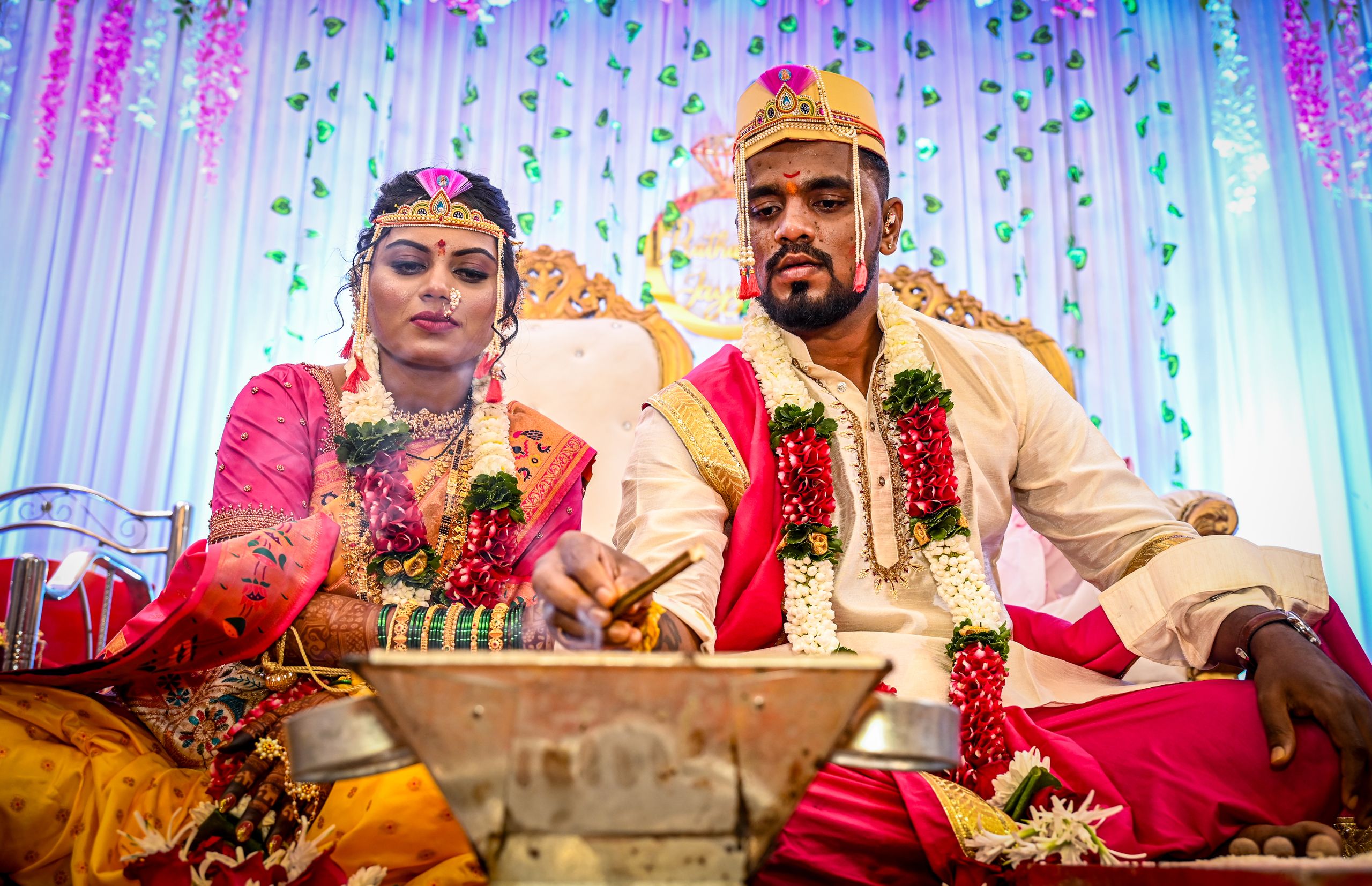
At the centre of many ceremonies is the havan, a small sacred fire around which the couple take their pheras or circumambulations. At UK venues the fire needs careful planning, as some allow a small contained havan and others require alternatives. Our article on the sacred fire at UK wedding venues explains the options.
What happens under the mandap
The mandap hosts the core rituals of the Hindu wedding, although the exact order and names differ between families. Rituals commonly performed beneath it include Kanyadaan, where the bride’s parents give their daughter’s hand in marriage; Hastamilap, the joining of hands; the Mangal Pheras around the fire; and Saptapadi, the seven steps and seven vows.
Because so much happens beneath it, the mandap needs to accommodate the couple, the priest, close family members and the items used in the puja, while remaining clearly visible to guests. Our guide to Hindu wedding ceremony rituals explained walks through each stage in more detail.
Mandap styles in modern UK weddings
Couples marrying in the UK today often blend tradition with personal taste. Some choose richly carved red and gold designs that honour their heritage; others prefer delicate floral canopies, airy minimal frames or opulent luxury structures with chandeliers. Regional customs also shape the look, from South Indian temple-inspired designs to North Indian and Gujarati styles.
- Traditional: carved pillars, rich colours and gold detailing, as in our traditional mandaps
- Floral: abundant fresh or premium faux blooms across the canopy and pillars
- Modern and minimal: clean frames and restrained styling for contemporary venues
- Outdoor: designs with weighted bases for gardens and lakesides, always with a wet-weather plan
Choosing a mandap that reflects your story
The right mandap honours the ceremony while suiting your venue, guest count and style. Talk to your families and your pandit about any rituals that affect the layout, then consider how the design will look in your space and in your photographs.
If you would like to see the options in person, viewings are available by appointment. Explore our full mandap collection or get in touch to start planning yours.
Frequently asked questions
Is a mandap only used for Hindu weddings?
The mandap is most closely associated with Hindu weddings, but it is also used in Jain weddings, and many couples include one in blended or fusion ceremonies that bring together different traditions.
Who sits under the mandap during the ceremony?
Typically the couple, the priest and close family members such as parents take part under the mandap. Exactly who joins varies by tradition, so it is worth confirming with your pandit.
Does a mandap have to have four pillars?
Four pillars are traditional and carry symbolic meaning for many families, but contemporary designs sometimes use different frames or canopies. Discuss any variation with your family and priest.