
Traditions · 4 min read
Hindu Wedding Ceremony Rituals Explained: A Guide for Couples and Guests
By Book a Mandap ·
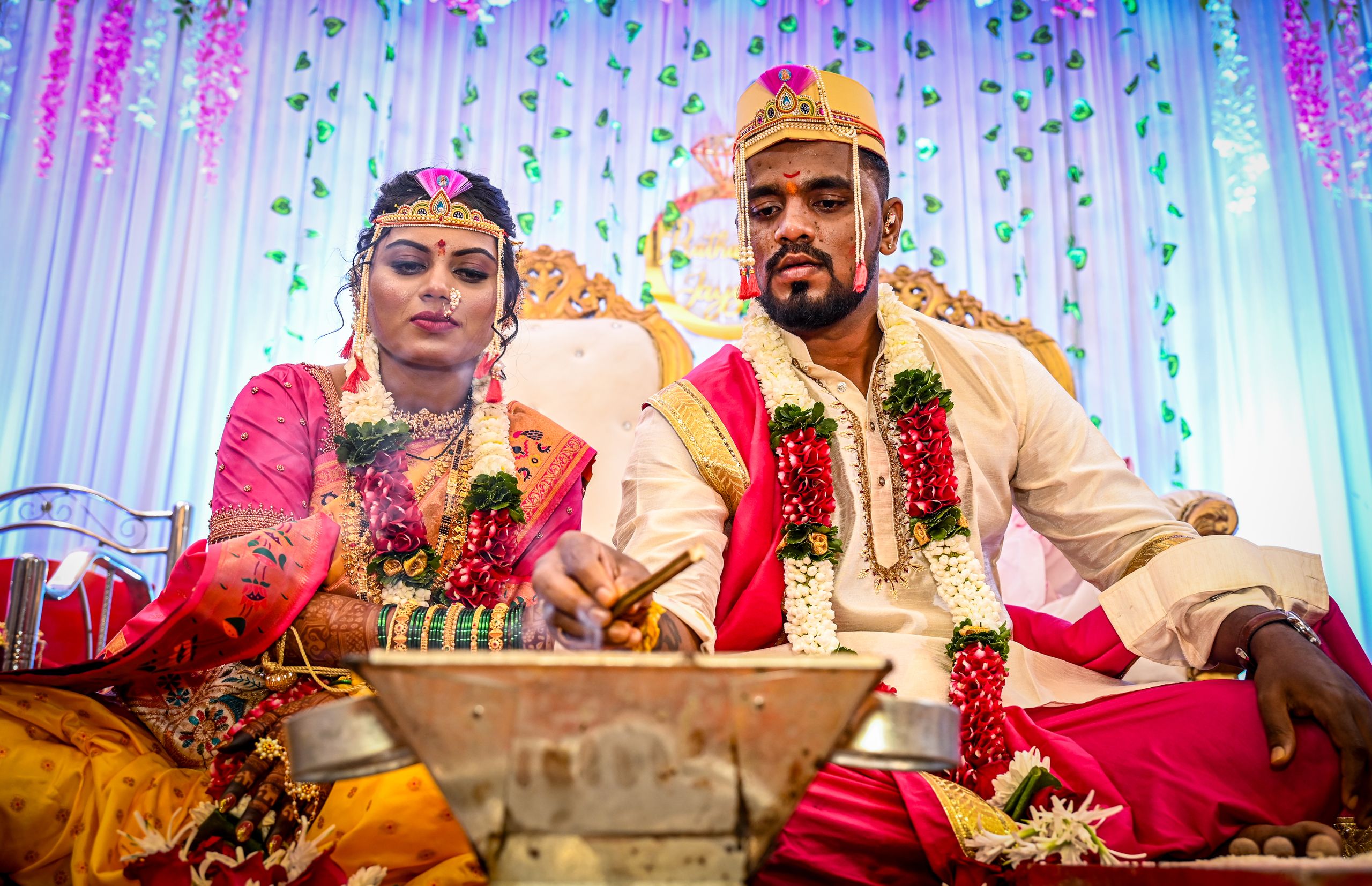
A Hindu wedding ceremony is rich with ritual, symbolism and family participation, and for many guests it can be wonderful but hard to follow. This guide explains the key Hindu wedding ceremony rituals that usually take place under the mandap, so couples can share the meaning with their guests and everyone can appreciate each moment.
Every Hindu wedding is a little different
There is no single Hindu wedding ceremony. Rituals, their order, their names and the languages used vary between regions, communities and individual families. A Gujarati ceremony may look quite different from a Tamil, Punjabi or Bengali one, and many families blend traditions or adapt them for a UK setting.
The descriptions below cover rituals that are widely observed, but your priest or pandit is the best guide to how your ceremony will run. It is worth talking with them early about timing, the rituals you want to include and anything your venue needs to know. For a broader picture of the ceremony space, see our guide to what a mandap is.
Arrival and the opening rituals
Many ceremonies begin with the arrival of the groom, often called the baraat, followed by a welcome from the bride's family. Once at the mandap, the ceremony commonly opens with a prayer to Lord Ganesh, who is honoured as the remover of obstacles, asking for blessings on the marriage.
The bride's entrance is one of the most anticipated moments. Depending on tradition she may be escorted by her brothers or maternal uncles, sometimes carried in a doli or walking beneath a decorative canopy of flowers or cloth.
The core rituals under the mandap
Although details vary, a number of rituals appear in many Hindu weddings. These are some of the most common, described in broad terms:
- Jaimala or varmala: the couple exchange flower garlands, signifying acceptance of one another
- Kanyadaan: the bride's parents give their daughter's hand in marriage, often regarded as one of the most emotional moments
- Hasta milap or granthi bandhan: the couple's hands are joined, or their garments are tied together, symbolising their union
- Agni puja: the sacred fire is lit and honoured as a witness to the marriage
- Pheras: the couple walk around the sacred fire, often four or seven times depending on tradition
- Saptapadi: the seven steps or vows taken together, central to many ceremonies
- Sindoor and mangalsutra: the groom applies sindoor to the bride's hair parting and ties the mangalsutra, a sacred necklace, in many traditions
- Ashirwad: blessings from elders, family and guests to close the ceremony
The sacred fire and the pheras
For many families, the sacred fire, or Agni, sits at the heart of the ceremony. Offerings such as ghee, rice and herbs are made into the fire as mantras are recited, and the couple circle it during the pheras. The number of rounds and the meaning attached to each varies between traditions.
In the UK, venues have different rules about open flames. Some allow a small, contained havan while others require alternatives. Our article on the sacred fire at UK wedding venues explains how couples and priests typically approach this, and our guide to Saptapadi, the seven steps explores one of the most meaningful parts of the ceremony in more detail.
Helping guests follow the ceremony
Ceremonies can last from around an hour to several hours, and guests who are new to Hindu weddings often appreciate a little guidance. A few thoughtful touches make a real difference:
- A printed or digital order of ceremony with short explanations of each ritual
- A family member or the priest offering brief explanations in English
- Seating arranged so guests have a clear view of the mandap
- Guidance on dress, such as covering heads where customary, and removing shoes if required
Choosing a mandap that suits your rituals
Your rituals shape the mandap you need. The space must comfortably fit the couple, priest, parents and the havan, with room for the pheras and for photographers to work. Most mandaps need roughly 3m x 3m to 5m x 5m of floor space plus room around them. A traditional mandap is a natural fit for ritual-rich ceremonies, but any style can be designed around your traditions.
If you would like to discuss how your ceremony will work in your chosen venue, contact us and we will happily talk it through.
Frequently asked questions
How long does a Hindu wedding ceremony last?
It varies widely by tradition and family, from roughly an hour to several hours. Your priest can give you a realistic timing for the rituals you plan to include.
What should guests wear to a Hindu wedding ceremony?
Many guests wear Indian formal wear or smart, colourful clothing. Some families ask guests to avoid black or white and to cover their heads, so check the invitation or ask the couple.
Are the rituals the same in every Hindu wedding?
No. Rituals, their order and their names vary between regions, communities and families, so each ceremony has its own character.


