Traditions · 3 min read
Mandap Traditions Across India's Regions and Communities
By Book a Mandap ·
The wedding mandap is shared across many Hindu traditions, yet its look, materials and rituals differ widely from region to region. For couples in the UK, especially those blending families from different backgrounds, understanding these mandap traditions can help you create a ceremony space that feels authentic to your heritage.
One mandap, many traditions
At its heart, the mandap is a sacred canopied space where the marriage rituals take place. Beyond that shared idea, regional customs shape everything from the colours and flowers used to the way the structure is built and blessed. If you are new to the concept, our guide to what a mandap is is a good starting point.
The overview below highlights some widely recognised regional features, but these are generalisations. Customs vary between communities within each region and between individual families, and many diaspora families have developed their own practices over generations. Always check with your elders and priest about what matters most in your tradition.
Gujarati and North Indian mandap traditions
In many Gujarati weddings, the mandap is prepared with its own rituals before the ceremony, and families may honour the structure or a pillar as part of the pre-wedding celebrations. Bright colours, mirror work and textiles with traditional motifs are often associated with Gujarati style, alongside abundant marigolds.
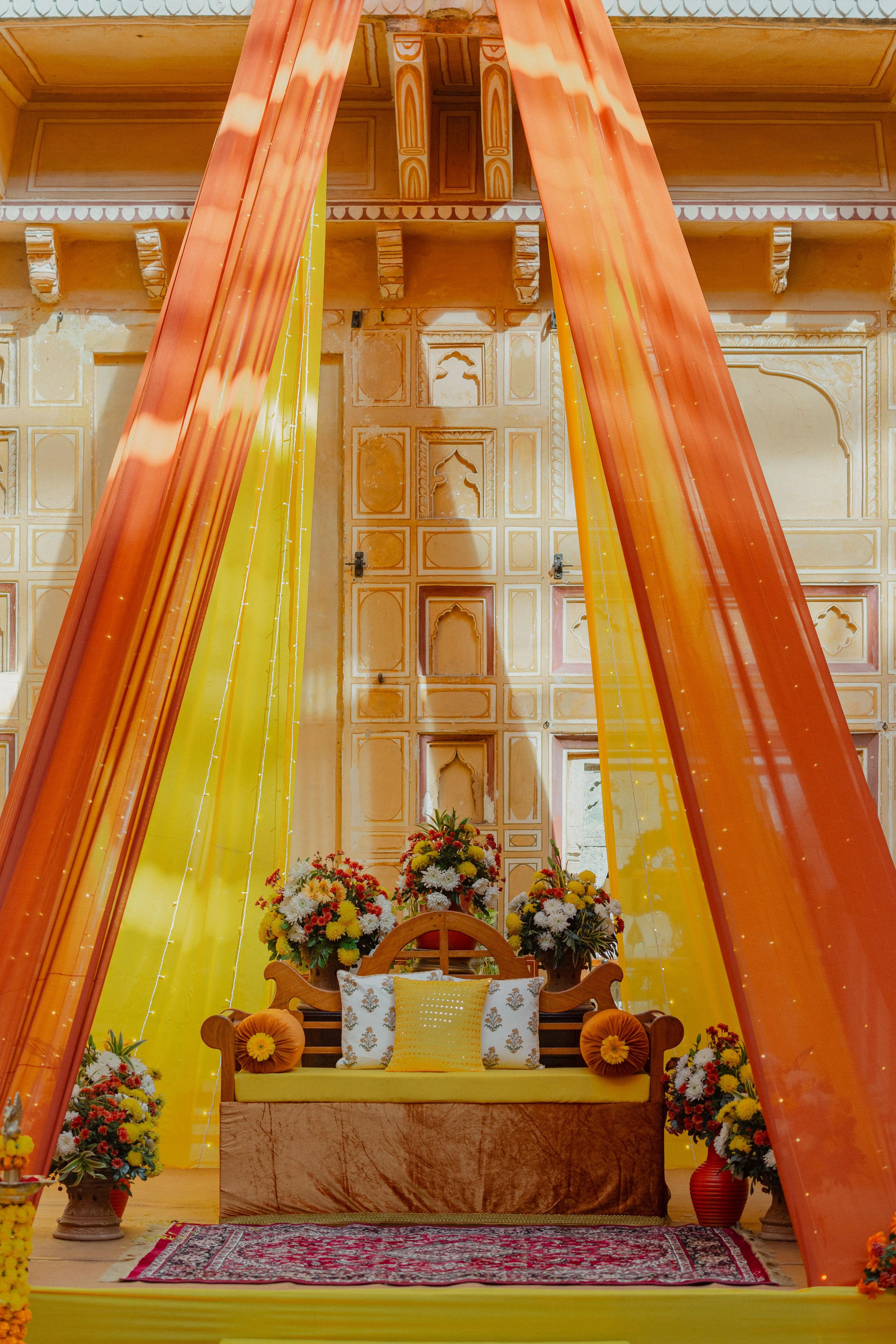
In many North Indian Hindu weddings, including Punjabi Hindu ceremonies, the mandap is often richly decorated in reds, golds and oranges, with draped fabrics, garlands and a central havan for the pheras. Grand, ornate designs are common, though many couples now choose softer palettes.
South Indian mandap traditions
South Indian weddings, whether Tamil, Telugu, Kannada or Malayali, often feature a strong connection to natural materials. Banana trees or banana leaves placed at the entrance or pillars are a well-known feature in many communities, often associated with prosperity and abundance. Jasmine, mango leaves and coconuts are also widely used.
Some South Indian ceremonies use a raised platform with a smaller canopy, sometimes called a manavarai or kalyana mandapam depending on the region and community. Ceremonies often take place in the morning according to an auspicious time, which can affect natural light and setup timings at your venue.
Bengali, Maharashtrian and other traditions
India's diversity means many more traditions than we can cover here. A few features that couples often mention include:
- Bengali weddings: the ceremony space, sometimes called the chhadnatala, may include banana trees at the corners and alpana, white decorative patterns drawn on the floor
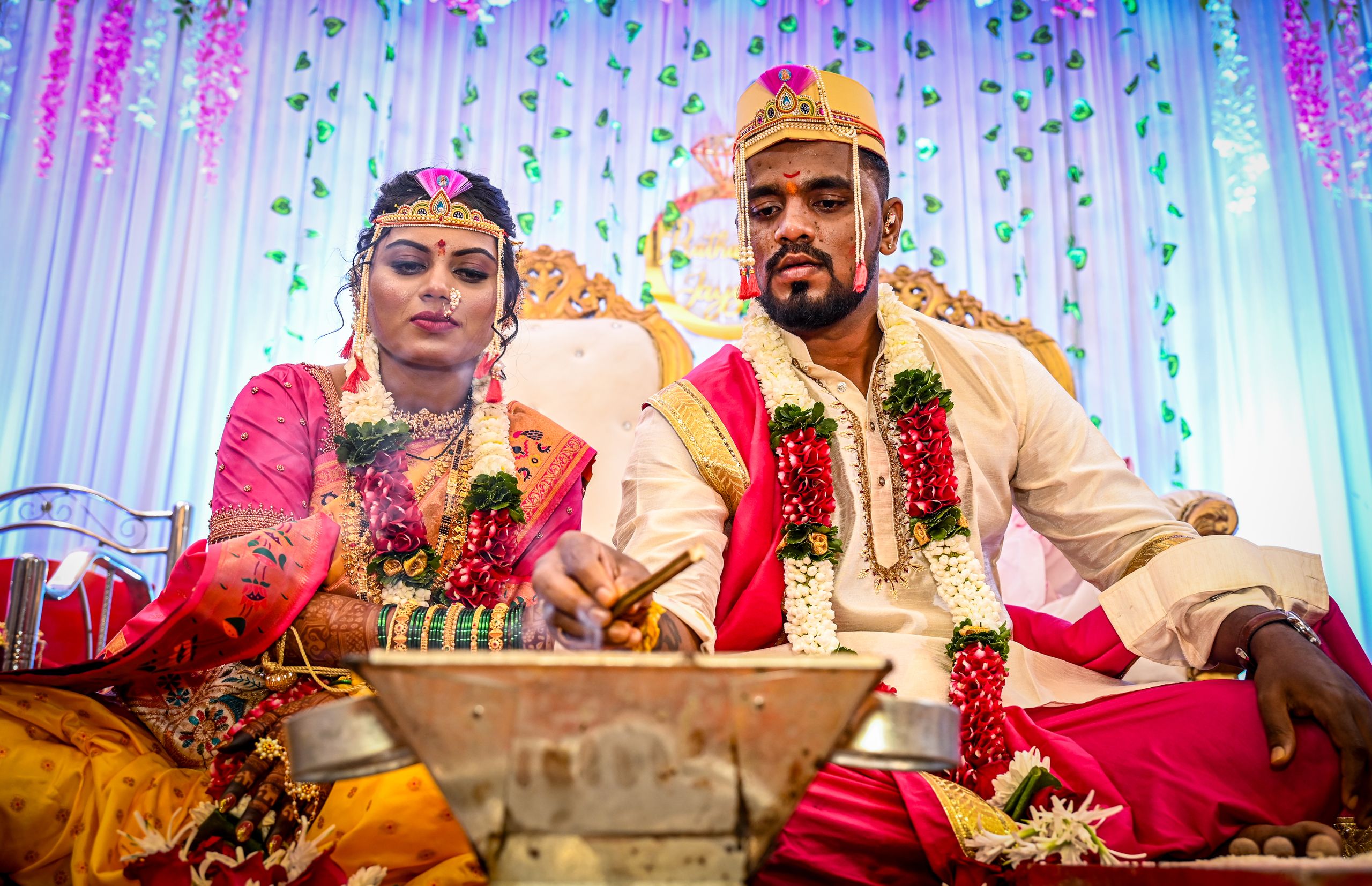
- Maharashtrian weddings: a lighter, elegant aesthetic is common, with rituals such as the antarpat, a cloth held between the couple before they see each other
- Marwari and Rajasthani weddings: ornate, regal styling with rich colours, carved detailing and lavish florals
- Sindhi and Kashmiri Pandit weddings: distinct rituals and customs that families often adapt for the UK setting
Blending traditions in a UK wedding
Many UK couples come from different regions, communities or faiths, and the mandap is a beautiful place to bring traditions together. You might combine banana leaves and marigolds, pair a South Indian jasmine palette with a North Indian draped canopy, or reflect each family's colours on the pillars.
- Talk to both families and priests early about must-have elements
- Decide which rituals will happen under the mandap and how much space they need
- Choose a palette and florals that honour both backgrounds
- Consider a design flexible enough to suit a fusion ceremony
Creating a mandap that reflects your heritage
Whichever tradition you follow, your mandap can be tailored to reflect it. A traditional mandap is a natural fit for ornate regional styling, while floral mandaps can be designed with jasmine, marigold or region-specific flowers. Couples blending cultures may also enjoy our ideas for fusion wedding mandaps.
Every mandap we provide is quoted individually, and viewings are available by appointment. To discuss a design that honours your traditions, contact our team.
Frequently asked questions
Can a mandap be customised for my regional tradition?
Yes. Florals, colours, fabrics and details such as banana leaves or marigold garlands can be adapted to reflect your region, community and family customs.
We are from different communities. Can our mandap reflect both?
Absolutely. Many couples blend elements from both families' traditions. Talking with both families and your priest early helps you decide what to include.
Do South Indian ceremonies need a different mandap setup?
Sometimes. Some ceremonies use a raised platform or particular decorations, and morning start times can affect setup. Share your plans early so the design and timings fit.